

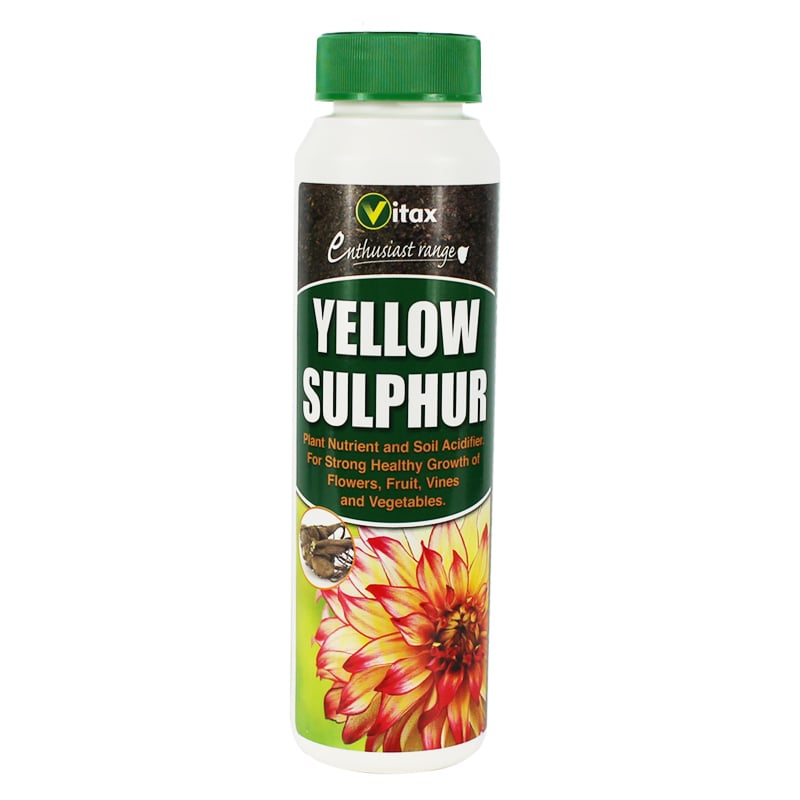

Description
Yellow sulphur is a valuable secondary nutrient that plays an important role in plant nutrition. It contributes to the formation of amino acids and supports normal protein synthesis, which are essential for healthy plant structure and steady growth. Due to reduced atmospheric sulphur from cleaner air regulations, many UK soils no longer receive enough sulphur naturally and may require supplementation.
Applying sulphur powder to soil or plants helps correct this imbalance, supporting productive growth and improved plant resilience. For broader nutrient support, organic seaweed plant food can also be used to supply additional natural minerals.
Benefits of Sulphur Powder for Plants
- Provides sulphur as a secondary nutrient required for normal plant development
- Helps reduce pale or yellow colouring in young leaves caused by nutrient deficiency
- Supports stronger growth and reduces vulnerability to powdery mildew and black spot
- Improves soil conditions for acid-loving plants such as azalea, rhododendron, heather and camellia
- Can offset the effects of hard water when growing plants in pots and containers
Why Plants May Need Added Sulphur
Lower levels of industrial emissions have reduced the amount of sulphur returning to the soil through rainfall. As a result, deficiencies are becoming more common. Early signs include yellowing between leaf veins or around the edges of new growth. A lack of sulphur can also weaken plants, increasing the likelihood of fungal issues such as powdery mildew and black spot.
How to Apply Sulphur Powder
Sulphur powder can be used either as a light foliar treatment or applied directly to the soil. Before use, gently shake the container and remove the cap. Apply by lightly squeezing the pack while aiming downward to ensure even distribution over leaves or soil surfaces.
Planting new trees, shrubs or flowers? Mycorrhizal fungi can also be applied at planting to encourage strong root establishment.
Suitable Plants and Growing Areas
Yellow sulphur supports healthy growth and helps prevent leaf discolouration in a wide range of plants including chrysanthemum, cineraria, delphinium, ornamental hop, hyacinth, cucumber, gooseberry, grape vine, marrow, pea, rose and strawberry. It is also effective as a soil conditioner for acid-loving plants such as azalea, rhododendron, heather and camellia.
Use in Containers and Planters
When growing plants in tubs or planters, sulphur can help counteract the effects of hard water. This improves soil conditions over time and supports longer-term plant health in confined growing spaces.
Pack Size
- 225g
Application Rates and Guidance
Foliar or plant treatment
Apply a light dusting, ensuring all leaf surfaces are evenly covered.
Soil application and acidification
Apply approximately 70–140g per m² to the soil surface and rake in thoroughly. When using sulphur to lower soil pH, test the soil after several months and repeat if required. Heavier soils may need additional applications. Treatments can be carried out around established plants.
Frequently Asked Questions
What is yellow sulphur used for?
It is used as a plant nutrient and soil acidifier that helps prevent yellowing of leaves, supports protein production and reduces susceptibility to powdery mildew and black spot.
How do I use sulphur powder in the garden?
It can be puffed lightly onto foliage or applied to soil around the base of plants. Ensure even coverage when applying.
Can I use it on all plants?
It can be used on many fruit, vegetables and ornamentals including gooseberry, cucumber, pea, marrow, rose and strawberry. It is also suitable for acid-loving plants such as azalea and rhododendron.
How often should I apply it?
Monitor plant health and soil pH to guide repeat applications. When used for acidification, heavier soils may require further treatments until the required pH is reached.
Is it suitable for acid-loving plants?
Yes. It can be used to improve growing conditions for acid-loving plants such as azalea, rhododendron, heather and camellia.
Does it help with powdery mildew and black spot?
Yes. Sulphur deficiency can increase susceptibility to these diseases, and sulphur application helps reduce risk while supporting strong, healthy growth.